Moving to the Netherlands is exciting: new city, new opportunities, new stroopwafels. But before you fully settle in, there’s one administrative step you simply cannot skip: registering at your local municipality, also known as the gemeente. It sounds bureaucratic (and it is), but it’s also one of the most important things you’ll do when you arrive. Here’s everything you need to know.
When you move to the Netherlands, you are required by law to register your address with the municipality where you live. This is called inschrijving in Dutch. Once registered, you’ll be added to the Basisregistratie Personen (BRP) the Personal Records Database and you’ll receive your BSN (Burgerservicenummer), a personal citizen service number. Think of the BSN as the key that unlocks almost everything in Dutch society.
Without a BSN, daily life in the Netherlands quickly becomes frustrating. You need it for:
In short: no registration, no BSN. No BSN, no functioning life in the Netherlands.
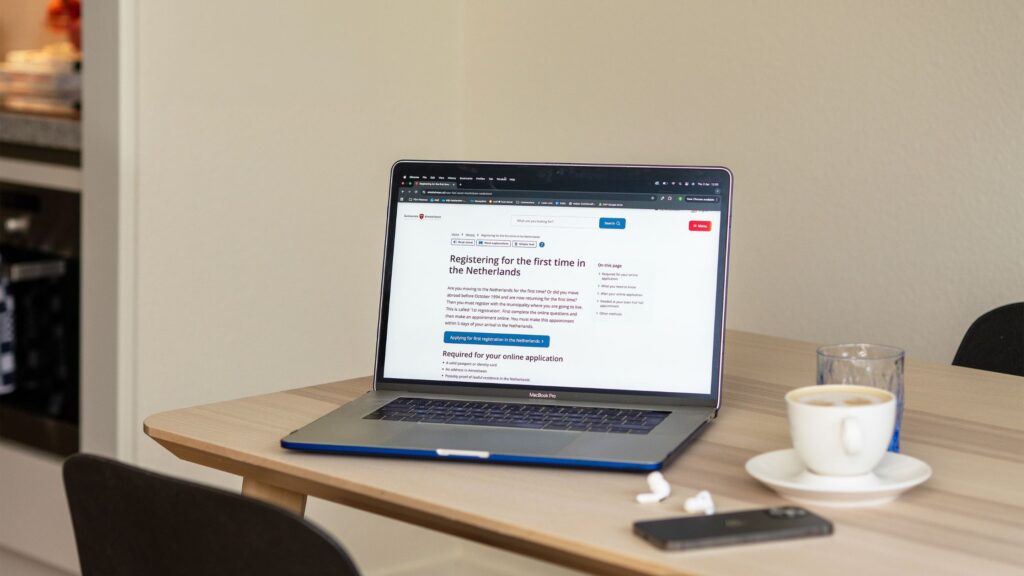
You must register within 5 days of moving to your new address in the Netherlands. In practice, many municipalities are flexible, but don’t leave it too long delays can affect your access to services and, in some cases, your legal status. If you’re an EU/EEA citizen staying longer than 4 months, registration is mandatory. For non-EU nationals, registration is typically tied to your residence permit process.
Requirements can vary slightly per municipality, but you’ll generally need:
Some municipalities also ask for a birth certificate, and in some cases a marriage certificate if you’re registering as a family. These may need to be apostilled and/or officially translated into Dutch.
Amstelveen has its own municipality: Gemeente Amstelveen, separate from Amsterdam, even though the two cities border each other. If you live in Amstelveen, you must register here, not in Amsterdam.
Where to go: The municipal service desk is located at the Stadsplein, the central square in the heart of Amstelveen. It’s easy to reach by public transport from Amsterdam and surrounding areas.
How to book: Make an appointment online via amstelveen.nl. Look for “verhuizing doorgeven” (change of address) or “eerste inschrijving” (first registration). Appointments are generally available within a reasonable timeframe, Amstelveen tends to be less backlogged than Amsterdam.
English support: Amstelveen is home to a large international community, particularly expats working at companies based in the Zuidas and Schiphol area. The municipality is experienced in dealing with international residents and staff at the desk can typically assist you in English.
A note on the Amsterdam border: It’s a common mistake for newcomers to assume they fall under Amsterdam’s municipality because of the proximity. Always check your postal address, if it says “Amstelveen,” your gemeente is Amstelveen, and your registration, local taxes, and municipal services all run through them. For broader expat services in the region, the Amsterdam Expat Center (serving the greater Amsterdam metropolitan area) can also be a useful resource for additional formalities such as DigiD applications and IND-related queries.
Once registered, a few things follow:
Using a temporary address? If you’re staying with friends or in a short-stay apartment while you find a permanent home, ask your host whether they’re willing to register you at their address. Without a fixed address, registration can be complicated.
Deregistering when you leave is equally important. If you move out of the Netherlands, you must formally deregister (uitschrijven) at your gemeente. This affects your tax obligations and any benefits you may be receiving.
Registration fraud is taken seriously. Registering at an address where you don’t actually live is illegal in the Netherlands. The municipality conducts address verification checks.
Registering at the gemeente isn’t the most glamorous part of expat life, but it’s the foundation everything else is built on. Do it early, bring the right documents, and your Dutch administrative life will get a whole lot smoother, leaving you more time to figure out how to properly pronounce Scheveningen.
Need more help settling in? Check out resources from the Netherlands Enterprise Agency (RVO) and your local expat center.
Contact
T: +31 (0)20 4266400
E: welcome@htelapartments.com
Laan van de Helende Meesters 421
1186 AL Amstelveen
Based in Greater Amsterdam, just a short distance from Schiphol, the Zuidas, Amsterdam Centre and Haarlem.
© 2026 | Highlight Hotel Group